
See what is a digital eye exam?
A digital eye exam uses automated refraction, high-resolution retinal imaging, and smart software alongside a clinician’s expertise. It delivers faster, repeatable measurements, reducing guesswork and improving confidence in your final prescription. Clear photos and OCT scans build a baseline so tiny changes in nerve or macula health can be tracked year to year. Data is stored and compared over time, helping your provider personalize care for screen strain, dry eye, or diabetes. The experience feels smoother, with fewer manual lens flips and more visual explanations you can actually understand. In short, a digital eye exam pairs precision technology with human judgment to protect sight efficiently and safely.
Core parts of a digital eye exam
Intake captures symptoms and history on a tablet, flagging red-flags before testing begins to keep you safe. Computerized refraction estimates nearsightedness, farsightedness and astigmatism objectively as a clean starting point. A digital phoropter then fine-tunes lenses in tiny steps, so choices feel effortless and results stay consistent. Imaging records retinal photos, and many clinics add OCT for cross-section views of the retina and optic nerve. Functional checks cover binocular balance, eye pressure, color and contrast and dryeye risk where appropriate. Clinician review validates the numbers, explains images in plain language and finalizes your treatment plan.
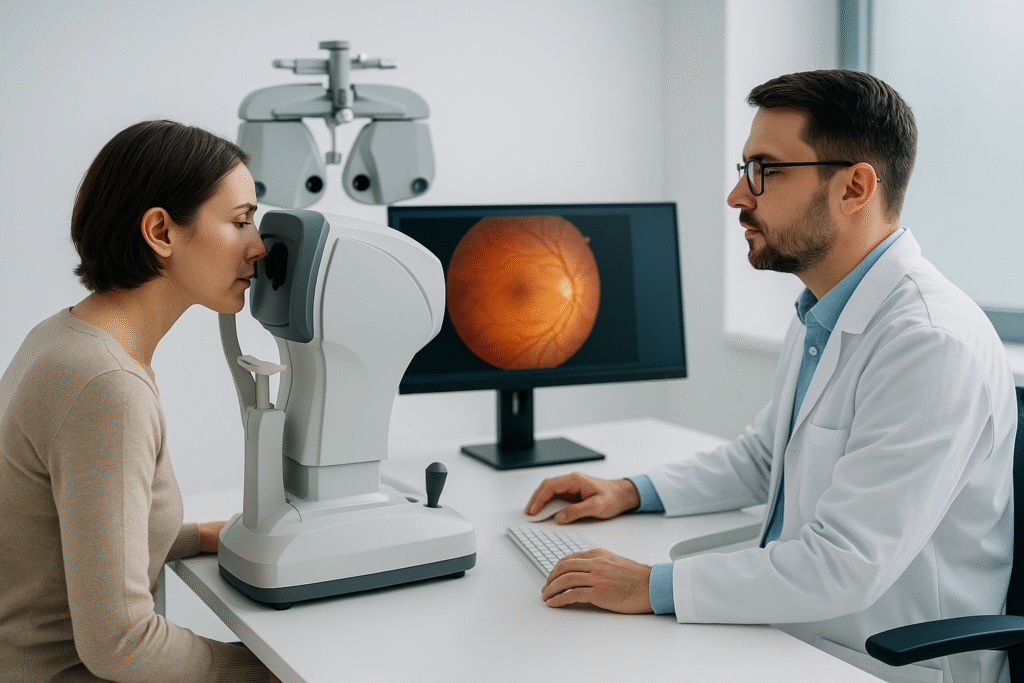
Table of Contents
Big wins you will notice today
Consistency improves because machines follow the same calibrated process, even across different visits and locations. Speed increases as automation trims chair time while preserving a full, medically sound evaluation of eye health. Prevention advances when subtle changes appear in images long before symptoms would bring you to the clinic. Access expands with virtual history, remote monitoring options, and easy sharing of reports between providers. Records become portable, enabling apples-to-apples comparisons that guide smarter decisions about glasses and care. Overall, a digital eye exam gives clarity, convenience, and early detection without sacrificing human oversight.
How a computerized eye examination works
You begin with an autorefractor that measures how light focuses in your eyes to estimate prescription values. Next, a digital phoropter cycles lenses quickly, letting you compare clarity with minimal fatigue or confusion. Fundus cameras capture detailed retinal images; some clinics add OCT to view layers and nerve thickness precisely. Software flags vessel changes, pigment shifts, or swelling patterns for the clinician to interpret in context. Additional tests may assess glare recovery, contrast sensitivity, and corneal health for contact lens wearers. Finally, your provider reviews results, answers questions, and issues a signed prescription or medical plan.
Steps to digital eye exam near me
Search digital eye exam near me, then filter by open-now, patient ratings, and insurance or payment options. Open profiles to verify modern phoropters, fundus cameras, OCT availability, and sample reports or image galleries. Call to confirm same-day prescriptions, contact lens fitting, and whether imaging is included in the visit price. Ask about accessibility, evening hours, and kid-friendly rooms if you are booking for family members too. Check follow-up and remake windows for eyewear so small adjustments later are easy and affordable. Shortlist two to three clinics and choose the one offering transparent pricing and clearly explained services.
Smart filters that save time
Prefer licensed optometrists or ophthalmologists who sign prescriptions and explain findings clearly before checkout. Look for imaging in the standard visit, including retinal photos and OCT when medically indicated or requested. Ensure you can download images and a readable summary to your phone or patient portal for future comparisons. Confirm secure records with multi-factor login, and ask whether contact lens fit assessments are included. Review eyewear policies: adjustment visits, remake timelines, and warranty coverage if comfort is not perfect. Pick teams that offer ergonomic coaching for heavy computer use to reduce strain between annual exams.
Things about a virtual eye exam
Telehealth handles history, symptom triage, and calibrated acuity checks using your phone or computer at home. Some platforms estimate refraction under controlled conditions, then coordinate clinic confirmation when required. Urgent symptoms trigger immediate in-person referrals to protect vision and rule out time-sensitive conditions. Digital reports summarize findings and direct you to nearby partners for imaging, pressure checks, or fittings. The best model is hybrid: do what is safe online, then complete definitive testing in a local clinic. That blend keeps a virtual eye exam convenient while maintaining accuracy, safety, and accountability.
What happens during a computerized eye examination?
You start with intake and symptom questions, followed by autorefractor measurements. A digital phoropter fine-tunes lenses, retinal images are captured, and sometimes OCT maps deeper layers. Extra checks can include eye pressure, binocular balance, and dry-eye screening. A clinician reviews everything, explains findings, and finalizes next steps
Is a digital eye exam safe for children and seniors?
Yes, it is widely used across ages. For children, clinicians evaluate focusing, eye teaming, and developmental concerns. For seniors, imaging helps detect glaucoma, macular degeneration, and diabetic changes early. The key is matching technology with age-appropriate testing and a thorough clinical assessment.
What equipment should a modern clinic have for a digital eye exam?
Look for an autorefractor, digital phoropter, fundus camera, and access to OCT. Practices that show sample reports, store images securely, and offer patient portals make ongoing care easier. If you wear contacts, corneal health tools and trained fitters should be part of the workflow.
What should I bring to the appointment?
Bring current glasses or contacts, prior prescriptions, a medication list, and insurance details. Note symptoms, screen habits, and any comfort issues with lenses or frames. If you use computers heavily, mention workstation setup. These details help tailor testing, imaging, and practical recommendations.
Powerful ways a digital eye exam beats old-school checks
Automated refraction gives an objective starting point, so there’s less guesswork before the human fine-tune. Digital phoropters make micro-changes quickly, helping you choose clearer lenses with less fatigue and time. Retinal photos and ultra-wide imaging document more of the back of the eye in minutes, building a baseline for next year. Clinicians review images with you on-screen, explaining glaucoma, macula, or diabetes risks in plain language. Results are stored and comparable across visits, so tiny changes are spotted early and acted on faster. That blend of data plus expert review is why leading clinics highlight “premium digital imaging” benefits.
Smart rules for a safe virtual eye exam
Use virtual testing for eligibility, history, and calibrated vision checks, then confirm prescriptions in-clinic when needed. Follow platform guidance on lighting, phone distance, and screen size to keep your results within tolerance. Know the limits: contact lens fitting, eye pressure, and full disease screening still require in-person care. Choose services that route your test to licensed eye doctors who review and sign off on results. Check your state or region’s availability and rules before you start to avoid surprises. This hybrid model mirrors how top tele-optometry brands run their Virtual Vision Test today.
Data-backed benefits of a computerized eye examination
Speed: chair time drops because pre-tests, refraction, and imaging are streamlined into one flow.
Consistency: devices repeat measurements the same way, improving day-to-day and clinic-to-clinic reliability. Detection: high-resolution imaging can reveal issues years before symptoms, supporting earlier intervention. Clarity: patients leave with images, numbers, and a plan they can share or compare later. Comfort: non-invasive cameras often capture retina details quickly without lengthy setup.
These advantages are emphasized across leading patient-education hubs and major optical retailers.
Conclusion:
Book a digital eye exam and request copies of images, measurements and an easy-to-read summary today.
Position screens at arm’s length, keep the top edge near eye level, and follow the 20-20-20 rest habit.
Save your report in the patient portal and on your phone so renewals and travel are quick and simple.
Compare two nearby clinics for imaging availability, contact lens fitting, and evening appointment options.
Share this guide with friends who keep searching digital eye exam near me but still feel unsure.
Small, steady actions now protect the eyesight you depend on for work, study, and everything you love.